
Being born with a tail may seem like something out of a fairy tale, but for some individuals, it's a reality. Known as "human tails," these rare birth defects occur in about 1 in every 10,000 births. While they are not functional tails, they can be a cause for concern for parents and their children.
What is a Human Tail?

A human tail is a protrusion that extends from the lower back, typically measuring a few centimeters in length. It contains no vertebrae and is not functional, meaning it cannot move on its own. The tail is composed of skin, connective tissue, and sometimes even muscle and cartilage.
The condition is also known as "caudal appendage" and "pseudotail." While it is rare, it is more common in certain populations, such as those of Asian and African descent. It is also more likely to occur in males than females.
Causes of Human Tails

The exact cause of human tails is not known, but it is believed to be a result of a genetic mutation during fetal development. The mutation can affect the development of the tailbone, causing it to grow abnormally. It can also affect the formation of the neural tube, which can lead to other birth defects.
Other factors that may contribute to the development of human tails include exposure to certain chemicals and medications during pregnancy, as well as maternal infections.
Symptoms and Diagnosis
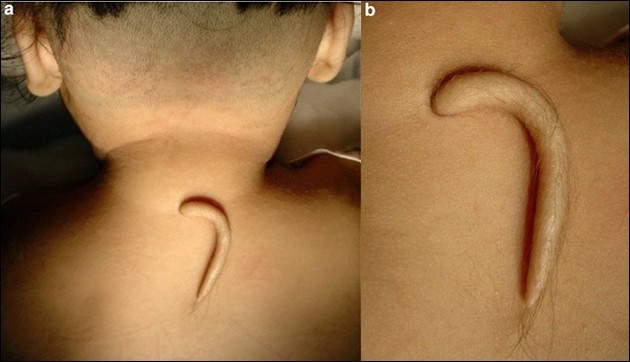
The most obvious symptom of a human tail is the protrusion from the lower back. Other symptoms may include a dimple or tuft of hair at the base of the tail, as well as abnormalities in the spine or nervous system.
Human tails are typically diagnosed during a physical exam shortly after birth. Additional testing, such as X-rays or an MRI, may be ordered to evaluate the spine and nervous system.
Treatment and Outcome
In most cases, human tails are harmless and do not require treatment. However, if the tail is causing discomfort or is affecting the function of the spine or nervous system, surgical removal may be necessary.
It is important to note that surgical removal of the tail is not without risks. There is a risk of nerve damage and other complications, and the decision to remove the tail should be made carefully and with the guidance of a medical professional.
Living with a Human Tail
For those born with a human tail, it can be a source of curiosity and even fascination for others. However, it can also be a source of embarrassment or self-consciousness for the individual.
It is important for parents and caregivers to provide support and guidance for their child as they navigate life with a human tail. This may include preparing them for questions or comments from others, as well as helping them develop a positive self-image.
Conclusion
Born with a tail is a rare condition that affects a small number of individuals. While it may be a cause for concern for parents and their children, it is typically harmless and does not require treatment. For those living with a human tail, it is important to have a supportive network and to approach life with a positive attitude.